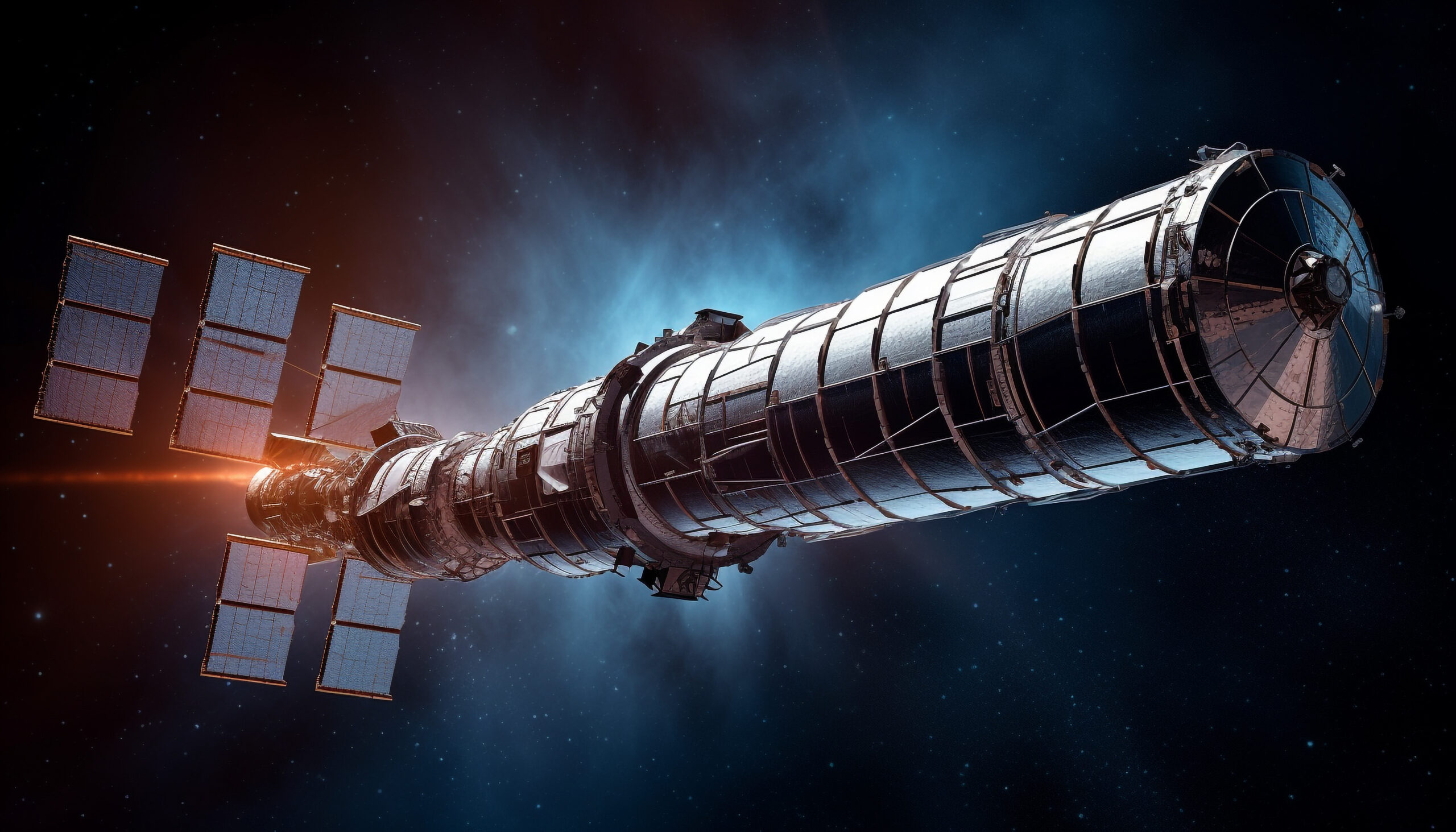
As humanity’s thirst for knowledge extends beyond the familiar confines of our solar system, deep space exploration has emerged as the frontier where the most profound discoveries await. In recent decades, advancements in space technology and a collective human curiosity have propelled us into the vastness of interstellar space, unraveling mysteries and reshaping our understanding of the cosmos.
Deep space exploration encompasses missions that venture far beyond the orbit of Earth, reaching into the distant reaches of our galaxy and beyond. Telescopes like the Hubble Space Telescope and the James Webb Space Telescope have provided unprecedented views of distant galaxies, offering glimpses into the early stages of the universe and shedding light on the fundamental forces that govern its evolution.
Robotic spacecraft, equipped with cutting-edge instruments, have undertaken ambitious missions to explore our solar system and beyond. NASA’s Voyager probes, launched in 1977, continue to journey into interstellar space, transmitting valuable data about the heliosphere and cosmic rays. More recent missions, such as New Horizons, have provided close-up views of distant dwarf planets like Pluto, expanding our knowledge of the outer reaches of our celestial neighborhood.
The search for extraterrestrial life is a central focus of deep space exploration. Missions like the Mars rovers—Spirit, Opportunity, and Curiosity—have scoured the Martian surface for signs of past or present life. Beyond our solar system, the study of exoplanets in the habitable zones of distant stars holds promise for finding potentially habitable environments. The upcoming James Webb Space Telescope is poised to play a pivotal role in characterizing the atmospheres of exoplanets, bringing us one step closer to answering the age-old question of whether we are alone in the universe.
The technological challenges of deep space exploration are formidable. The vast distances involved require spacecraft to endure harsh conditions, navigate accurately, and operate autonomously for extended periods. As we consider missions to the outer edges of the solar system and interstellar space, propulsion systems capable of achieving higher speeds and more efficient energy sources become crucial for ensuring the success of these ambitious endeavors.
Deep space exploration also holds the potential for future human missions. While sending robotic probes allows us to reach distant destinations efficiently, the human spirit of exploration naturally gravitates towards the idea of sending astronauts on extended missions to explore the outer planets, asteroids, or even distant star systems. The challenges of long-duration space travel and life support in the unforgiving environment of deep space present formidable obstacles, but they are challenges that future generations of scientists and engineers are poised to address.
As we continue our journey into the cosmos, deep space exploration stands as a testament to human ingenuity and the insatiable curiosity that drives us to venture into the unknown. From unraveling the mysteries of the early universe to seeking signs of life beyond Earth, our exploration of deep space is a perpetual odyssey that promises to reshape our understanding of the cosmos and our place within it.
Dodaj komentarz