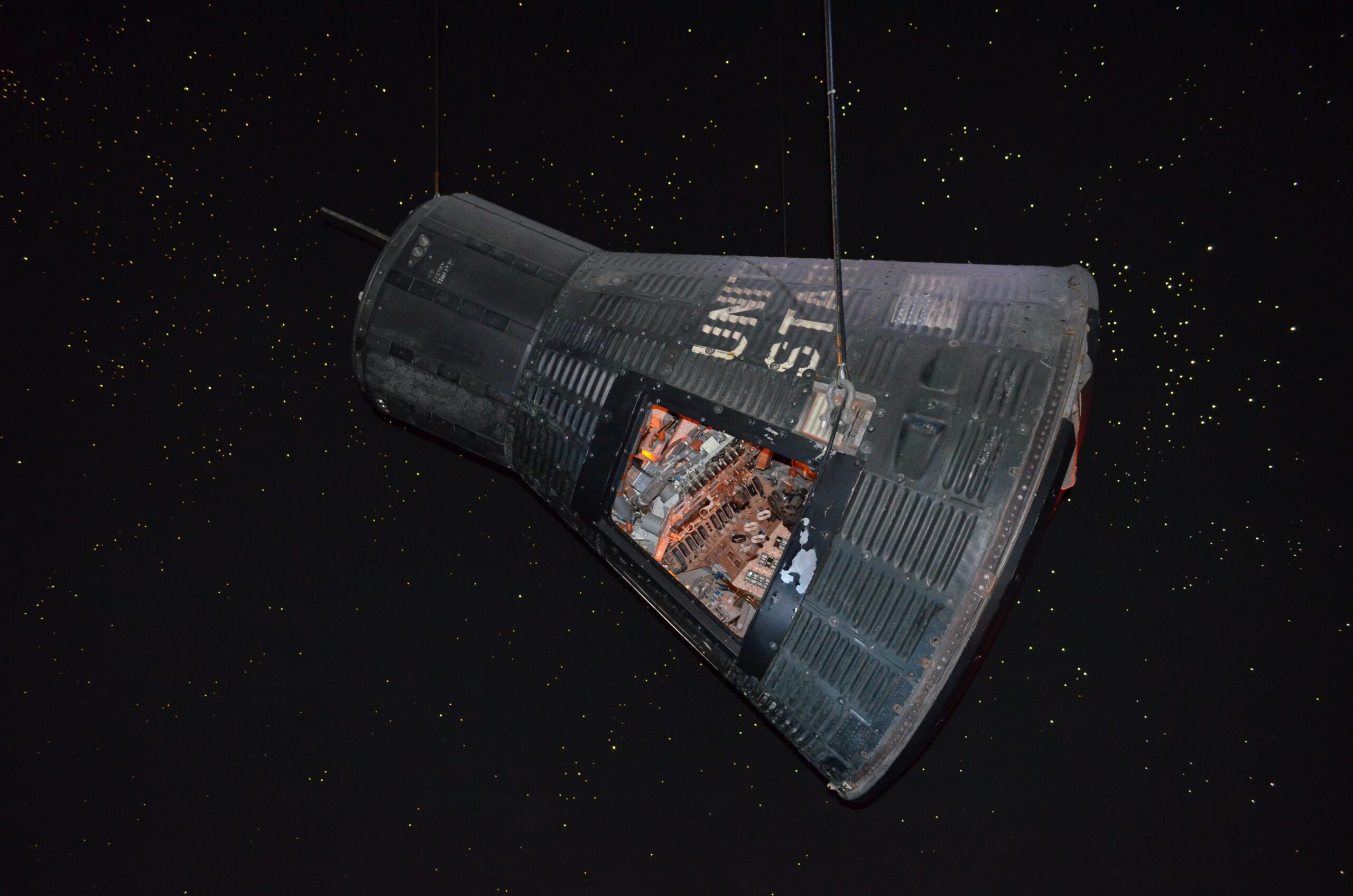
The Mercury Program, initiated by NASA in the late 1950s, marked the dawn of human space exploration and paved the way for America’s ambitious journey beyond Earth’s atmosphere. Conceived in the midst of the Cold War and fueled by the space race with the Soviet Union, the Mercury Program aimed to send the first American astronauts into space, orbit the Earth, and return safely—a series of monumental feats that would set the stage for subsequent lunar missions.
Launched on May 5, 1961, with the historic flight of Alan Shepard aboard the Freedom 7 spacecraft, the Mercury Program achieved the United States’ first human spaceflight. Shepard’s suborbital mission demonstrated that American astronauts could operate in the harsh environment of space and marked a crucial milestone in the race for supremacy in space exploration.
The Mercury Program, comprising six manned flights between 1961 and 1963, included several significant achievements. John Glenn’s orbital flight on February 20, 1962, aboard Friendship 7 made him the first American to orbit the Earth, completing three orbits in just under five hours. Glenn’s mission not only showcased the capabilities of the Mercury spacecraft but also solidified the United States’ position in the space race.
The Mercury Program’s contributions extended beyond the confines of space. The knowledge gained from these early missions laid the groundwork for subsequent programs like Gemini and Apollo, ultimately leading to the United States achieving President John F. Kennedy’s goal of landing a man on the Moon with the Apollo 11 mission in 1969.
Despite its relatively short duration, the Mercury Program played a pivotal role in shaping the trajectory of space exploration. The challenges faced and lessons learned during these early missions provided invaluable insights that guided subsequent endeavors, fostering a legacy that endures in the annals of human spaceflight history. The Mercury astronauts, known as the „Mercury Seven,” became national heroes, embodying the spirit of exploration and inspiring generations to come.
As we reflect on the Mercury Program’s significance, it stands as a testament to the courage, ingenuity, and determination of the early pioneers of space exploration. The successful execution of these pioneering missions not only propelled the United States into the forefront of human spaceflight but also ignited a flame of curiosity and aspiration that continues to burn brightly as we venture deeper into the cosmos.
Dodaj komentarz