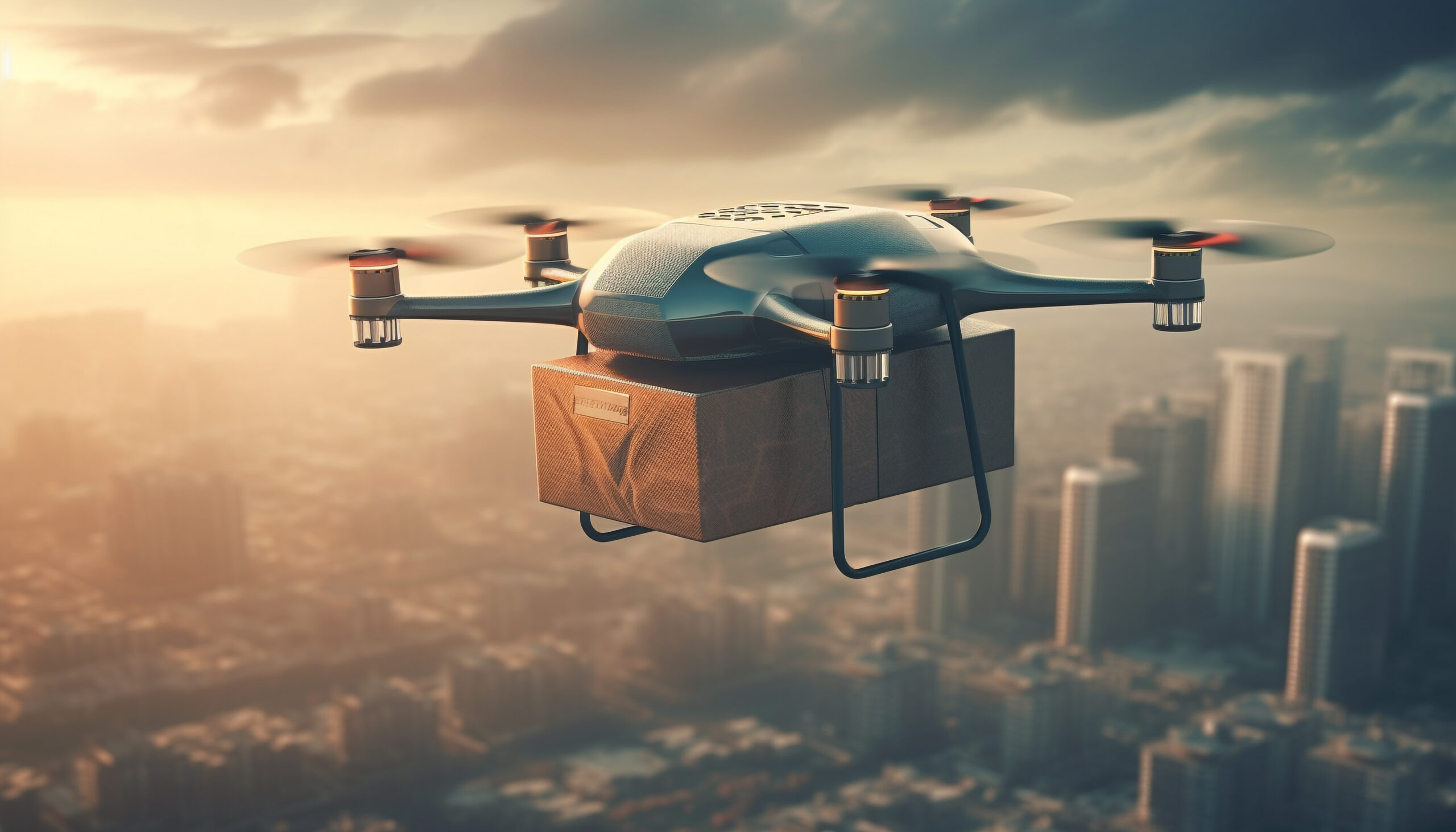
In the rapidly evolving landscape of logistics, the integration of drones is emerging as a transformative force, revolutionizing the traditional methods of warehousing and delivery. Drones, or Unmanned Aerial Vehicles (UAVs), are taking center stage in logistics operations, offering unprecedented efficiency, speed, and cost-effectiveness. From streamlining warehouse management to enabling swift and precise deliveries, the role of drones in logistics is reshaping the industry’s approach to the movement of goods.
Warehousing, a critical component of logistics, is experiencing a paradigm shift with the introduction of drone technology. Drones equipped with advanced imaging and scanning capabilities are employed for inventory management and monitoring in large warehouses. These aerial devices navigate through the facility, capturing real-time data on stock levels, identifying discrepancies, and streamlining the inventory control process. The result is improved accuracy, reduced human error, and enhanced overall efficiency in warehouse operations.
The use of drones extends beyond warehouse management to the last mile of delivery, where they play a pivotal role in optimizing the logistics chain. Drones offer a rapid and flexible solution for delivering packages to customers’ doorsteps, particularly in areas with challenging terrain or limited accessibility. The ability of drones to navigate through congested urban environments or reach remote locations enables companies to offer faster delivery times, enhancing customer satisfaction and meeting the demands of an increasingly time-sensitive market.
The impact of drones on logistics goes beyond efficiency gains; it also addresses environmental concerns. Electric-powered drones contribute to the reduction of carbon emissions associated with traditional delivery methods. As companies strive to implement eco-friendly practices, the adoption of drone technology aligns with broader sustainability goals, offering a cleaner and more environmentally responsible approach to logistics operations.
Challenges such as regulatory frameworks, safety concerns, and public acceptance remain hurdles to the widespread adoption of drone technology in logistics. Governments and aviation authorities are working to establish clear guidelines and regulations to ensure the safe integration of drones into airspace. Additionally, initiatives to educate the public about the safety and benefits of drone technology are essential for building trust and fostering acceptance.
In conclusion, the role of drones in logistics is evolving from a futuristic concept to a tangible reality with practical applications. From warehouse optimization to last-mile delivery, drones are proving to be a versatile and efficient tool for addressing the challenges of modern logistics. As technology continues to advance and regulatory frameworks mature, the widespread adoption of drones in logistics holds the promise of reshaping the industry and enhancing the overall efficiency and sustainability of supply chain operations.
Dodaj komentarz